
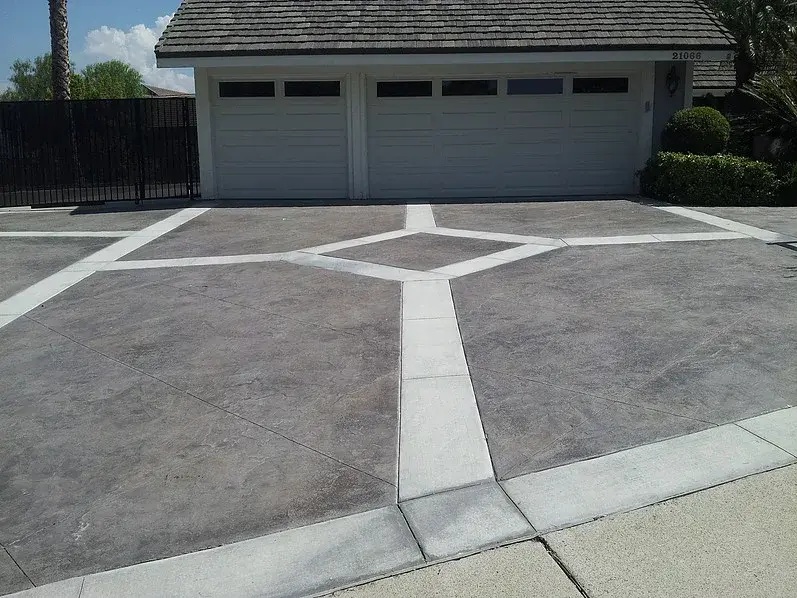
Choosing the right driveway material boosts your home’s curb appeal and value, with concrete offering superior longevity and asphalt providing budget-friendly flexibility. Homeowners often debate concrete driveway vs. asphalt based on factors like climate, budget, and maintenance. At RIVO Landscaping, we’ve installed hundreds of driveways, helping clients pick the best option for lasting results.
Key Comparison Table
| Feature | Concrete Driveway | Asphalt Driveway |
| Lifespan | 30-50 years | 15-20 years |
| Initial Cost | $4-10/sq ft (higher) | $2-6/sq ft (lower) |
| Installation Time | 3-7 days cure | 1-2 days |
| Maintenance | Low (seal every 3-5 yrs) | Higher (seal yearly) |
| Climate Suitability | Better for heat; cracks in freeze-thaw | Flexible in cold |
| Customization | Stamping, staining | Limited colors |
What Is a Concrete Driveway?
Concrete driveways consist of cement, sand, gravel, and water, poured and cured into a solid slab. Options include stamped concrete for patterns mimicking stone or brick, and stained versions for color variety. These suit modern homes seeking durability and aesthetic appeal.
What Is an Asphalt Driveway?
Asphalt driveways use a hot mix of bitumen and aggregates, rolled smooth for a blacktop finish. This oil-based material spreads easily, making it popular for quick residential projects on a budget.
Pros and Cons of Concrete
Pros:
- Exceptional durability lasts decades with minimal cracking.
- Highly customizable via stamping, staining, or polishing for unique designs.
- Low long-term maintenance and eco-friendly with recycled options.
- Increases home resale value through a premium appearance.
Cons:
- Higher upfront costs and longer curing time delay use.
- Repairs involve patching, which can show seams if not done expertly.
- Prone to cracking in freeze-thaw climates without proper reinforcement.
Pros and Cons of Asphalt
Pros:
- Lower initial cost makes it accessible for most budgets.
- Fast installation allows vehicle use within days.
- Flexible material resists cold-weather cracking better.
- Simple crack-filling repairs extend usability.
Cons:
- Shorter lifespan requires more frequent resealing.
- Softer in hot weather, leading to ruts or fading.
- Limited design options, mostly black or dark shades.
- Higher ongoing maintenance to prevent oil stains and degradation.
Cost Breakdown
Concrete costs $4-10 per square foot due to materials and labor, but its 30+ year life yields better ROI over asphalt’s $2-6 per square foot and 15-20 years. Factors like driveway size, site prep, and location add 20-30% to totals; for a 600 sq ft driveway, expect $3,000-$6,000 for asphalt vs. $5,000-$12,000 for concrete. Long-term, concrete saves on replacements.
Long-Term ROI Table:
| Period | Concrete Total Cost | Asphalt Total Cost |
| 20 Years | $6,000 (install + maint.) | $8,000 (install + 1 replace) |
| 40 Years | $8,000 | $16,000 |
Maintenance Tips
Seal concrete every 3-5 years and clean spills promptly to prevent stains. For asphalt, fill cracks annually and reseal yearly to block water damage. RIVO Landscaping recommends professional inspections to catch issues early.
Which Is Right for You?
Opt for asphalt if budget or speed matters, especially in cold climates. Choose concrete for longevity, customization, and hot regions. Consider your needs: high-traffic homes favor concrete; rentals suit asphalt.
Conclusion
No universal winner – concrete excels in durability, asphalt in affordability. Trust RIVO Landscaping for expert concrete or asphalt driveway installation tailored to your home. Contact us today for a free quote: rivolandscaping.com/driveways or call (555) 123-4567.